

Introduction
A faulty faucet may seem like a small household issue, but a dripping tap, leaking handle, or sudden drop in water pressure can quickly become frustrating. Whether the problem occurs in a kitchen sink, bathroom basin, laundry area, or utility room, finding the cause is the first step toward a lasting solution. A plumber for faucet repair can inspect the fixture, identify damaged components, and recommend an appropriate repair or replacement.
Many faucet problems develop gradually because of regular use, worn seals, mineral deposits, or loose connections. Recognizing the warning signs early can help homeowners avoid unnecessary water waste and prevent minor plumbing issues from becoming more complicated.
What Does a Faucet Repair Plumber Do?
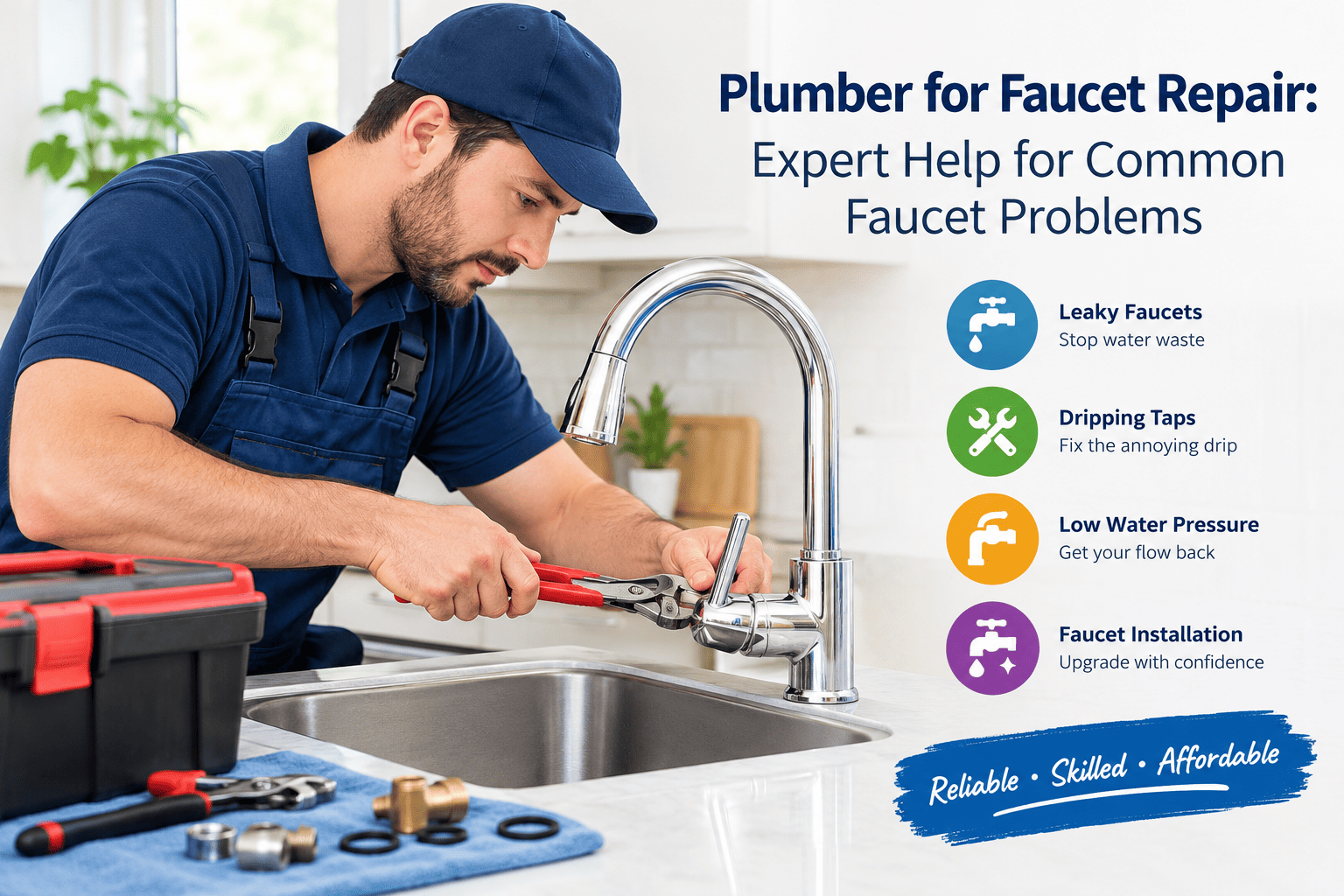
A faucet repair plumber specializes in diagnosing and repairing problems affecting taps, handles, internal valves, and water connections. The work may involve replacing a worn cartridge, repairing a damaged washer, tightening loose fittings, or restoring proper water flow.
Professional faucet repair services can cover kitchen faucets, bathroom taps, utility sinks, mixer faucets, and pull-down sprayer systems. The exact solution depends on the fixture’s design and the location of the problem. Rather than automatically recommending a new faucet, a reliable plumber evaluates whether repairing the existing unit is practical and cost-effective.
Common Faucet Problems That Require Professional Repair
1. Dripping Faucets
A faucet that continues dripping after the handle has been closed is one of the most common plumbing problems. The cause may be a worn rubber washer, damaged O-ring, faulty cartridge, or deteriorated valve seat. Repeatedly tightening the handle usually does not solve the underlying issue and may damage internal components.
A professional plumber can identify the faulty part and replace it with a compatible component. Fixing a dripping faucet promptly also helps reduce unnecessary water consumption. The repair method depends on whether the fixture uses a compression mechanism, cartridge, ball valve, or ceramic-disc system.
2. Water Leaking Around the Handle or Base
Sometimes water escapes around the faucet handle or collects on the sink surface instead of dripping from the spout. This can indicate worn seals, loose connections, or damaged O-rings inside the fixture. If ignored, moisture may spread into the cabinet below the sink and damage stored items or surrounding materials.
A faucet leak repair specialist checks where the water originates before dismantling the fixture. Replacing the correct seal or tightening an appropriate connection may resolve the issue without requiring a complete faucet replacement. If water is reaching electrical equipment or causing significant flooding, shut off the water supply when safe and seek prompt professional assistance.
3. Low Water Pressure
Weak water flow can make ordinary activities such as washing dishes, brushing teeth, or filling containers take longer. In many cases, a clogged aerator is responsible because mineral deposits and small particles accumulate in the screen at the faucet’s tip.
Other possible causes include a blocked cartridge, partially closed shutoff valve, kinked supply hose, or a wider plumbing supply problem. A plumber can determine whether the issue affects one fixture or multiple taps throughout the property. This distinction is important because low pressure throughout the home may require a different solution from a localized faucet blockage.
4. Stiff or Loose Faucet Handles
A handle that becomes difficult to turn can indicate mineral buildup, worn internal parts, corrosion, or a damaged cartridge. Loose handles may result from a worn retaining screw or other mechanical components. Both problems can make controlling water temperature and flow more difficult.
A professional can inspect the handle assembly and determine whether cleaning, tightening, lubrication with an appropriate plumbing product, or component replacement is necessary. Avoid forcing a stuck handle, as excessive pressure can break the mechanism or damage the faucet finish.
Kitchen Faucet Repair: What Homeowners Should Know
Kitchen faucets experience frequent use throughout the day. Washing dishes, preparing meals, cleaning vegetables, and filling cooking pots place repeated demands on their moving parts and water connections. Over time, even a good-quality kitchen sink faucet can develop leaks, reduced flow, or problems with its handle.
Modern kitchen fixtures may include pull-down sprayers, flexible hoses, spray-selection buttons, and specialized cartridges. A malfunctioning sprayer may result from a blocked nozzle, damaged hose, or faulty diverter. A plumber can inspect these components and restore normal operation where repair is practical.
When choosing a kitchen faucet repair service, consider the fixture’s age, availability of replacement parts, and condition of the surrounding plumbing. Repairing a single component is often a sensible option when the faucet body remains in good condition.
Bathroom Faucet Repair for Everyday Comfort
Bathroom faucets are essential for handwashing, personal hygiene, and daily grooming. A dripping bathroom tap can be irritating, while a leaking mixer faucet may create problems with temperature control or leave water around the basin.
Common bathroom faucet issues include damaged cartridges, worn seals, loose handles, clogged aerators, and leaks around the mounting area. Hard-water deposits may also affect the appearance and movement of faucet components. Regular cleaning can help maintain the exterior, but internal problems generally require a more targeted repair.
A qualified plumber can assess whether a bathroom faucet needs a minor adjustment, replacement parts, or a new fixture. Prompt attention is particularly important when water leaks into the vanity cabinet, where hidden moisture can damage wood-based materials and encourage mold growth.
How to Choose the Right Plumber for Faucet Repair
Selecting the right professional can make the difference between a temporary fix and a dependable repair. Homeowners should look for someone with relevant plumbing experience, clear communication, and a practical approach to diagnosing faucet problems.
Consider these factors before hiring a service:
- Relevant experience: Ask whether the plumber handles your faucet type, including mixer taps and pull-down sprayers.
- Clear pricing: Request an estimate covering labor, replacement parts, and any additional charges.
- Appropriate credentials: Check licensing or registration requirements where applicable, along with insurance and other local requirements.
- Repair recommendations: A trustworthy professional should explain why a part needs repair or replacement.
- Warranty information: Ask whether the work or replacement components include a service guarantee.
- Customer feedback: Read recent reviews and look for consistent comments about reliability, workmanship, and communication.
It is also useful to describe the symptoms before scheduling a visit. Explain whether the faucet drips when switched off, leaks around its base, or produces weak water flow. These details help the plumber prepare for the appointment.
What Affects the Cost of Faucet Repair?
The cost of faucet repair varies according to the nature of the problem, the type of fixture, local labor rates, and the parts required. Replacing an accessible washer or aerator may be relatively inexpensive, whereas repairing a specialized cartridge or replacing a difficult-to-remove faucet can require more time and materials.
Additional expenses may arise if the shutoff valves are damaged, the supply lines need replacement, or a hidden leak has affected the cabinet beneath the sink. Emergency appointments may also carry different charges from scheduled visits.
Before approving the work, request an itemized estimate where possible. Compare the expected repair cost with the price of a suitable replacement fixture. This makes it easier to choose a solution based on long-term value rather than the initial price alone.
Should You Repair or Replace a Faucet?
Repair is often appropriate when the faucet body is sound and the problem comes from a replaceable component. A new washer, O-ring, cartridge, or aerator may restore normal performance without the expense of purchasing an entirely new fixture.
Replacement may be more practical when the faucet is badly corroded, its body is cracked, compatible parts are unavailable, or repeated repairs have become uneconomical. Homeowners planning a kitchen or bathroom renovation may also choose to upgrade an outdated fixture for improved appearance or functionality.
A professional assessment can help compare both options. Consider the faucet’s condition, expected remaining service life, water-use requirements, and installation costs before making the final decision.
Can You Fix a Faucet Yourself?
Some simple faucet problems can be addressed without professional assistance. Cleaning an accessible aerator, for example, may restore water flow when mineral deposits are restricting the outlet. Checking that a visible shutoff valve is fully open may also help if the water supply has been unintentionally restricted.
More involved repairs require greater care. Before disassembling a faucet, turn off the relevant water supply and open the tap to release remaining pressure. Keep small components organized and use replacement parts that match the faucet’s make and model.
If a shutoff valve is seized, connections are corroded, or water continues leaking after a repair, stop rather than applying excessive force. Incorrect assembly can cause further leaks or damage. A professional plumber is the safer choice when the cause is unclear or the repair involves difficult plumbing connections.
Preventive Maintenance Tips for Faucets
Regular maintenance can help reduce wear and identify developing problems before they become serious. Wipe faucets dry after use when practical, remove mineral deposits using a finish-compatible cleaning method, and avoid harsh chemicals that may damage protective coatings.
Pay attention to slow drips, changes in water pressure, unusual noises, and handles that suddenly become stiff. Inspect the area beneath sinks occasionally for moisture, staining, or damp cabinet materials. These simple checks can reveal problems that are not immediately visible from above the sink.
Avoid overtightening faucet handles or using excessive force on old fittings. If a faucet repeatedly develops the same problem, investigate the underlying cause rather than continually replacing the same component.
Frequently Asked Questions
1. When should I call a plumber for faucet repair?
Contact a plumber when a faucet continues leaking, its handle stops working properly, water pressure remains low after basic checks, or a repair requires removing corroded components. Persistent leaks around supply connections also deserve professional attention.
2. Can a dripping faucet be repaired without replacing the whole fixture?
Yes. Many dripping faucets can be repaired by replacing a worn washer, cartridge, O-ring, or another faulty internal component. The appropriate repair depends on the faucet’s design and the condition of its valve mechanism.
3. Why does my faucet have low water pressure?
Possible causes include a clogged aerator, mineral buildup, a restricted supply hose, a partially closed valve, or a faulty cartridge. If several fixtures have low pressure, the cause may involve the wider plumbing system rather than one faucet.
4. How long does faucet repair take?
The time required depends on the problem, fixture design, and availability of replacement parts. A straightforward component replacement may take less time than a repair involving corrosion, inaccessible connections, or a complete faucet installation.
Conclusion
A faulty faucet does not always require a complete replacement, but it should not be ignored. Dripping water, leaking handles, stiff controls, and reduced water flow can indicate worn components or underlying plumbing issues. Identifying the cause early helps homeowners make informed decisions and avoid unnecessary repairs.
Choosing an experienced plumber for faucet repair provides a practical way to diagnose the issue, compare repair and replacement options, and restore reliable faucet performance. With appropriate maintenance and timely attention to warning signs, kitchen and bathroom faucets can remain functional and dependable for everyday use.