

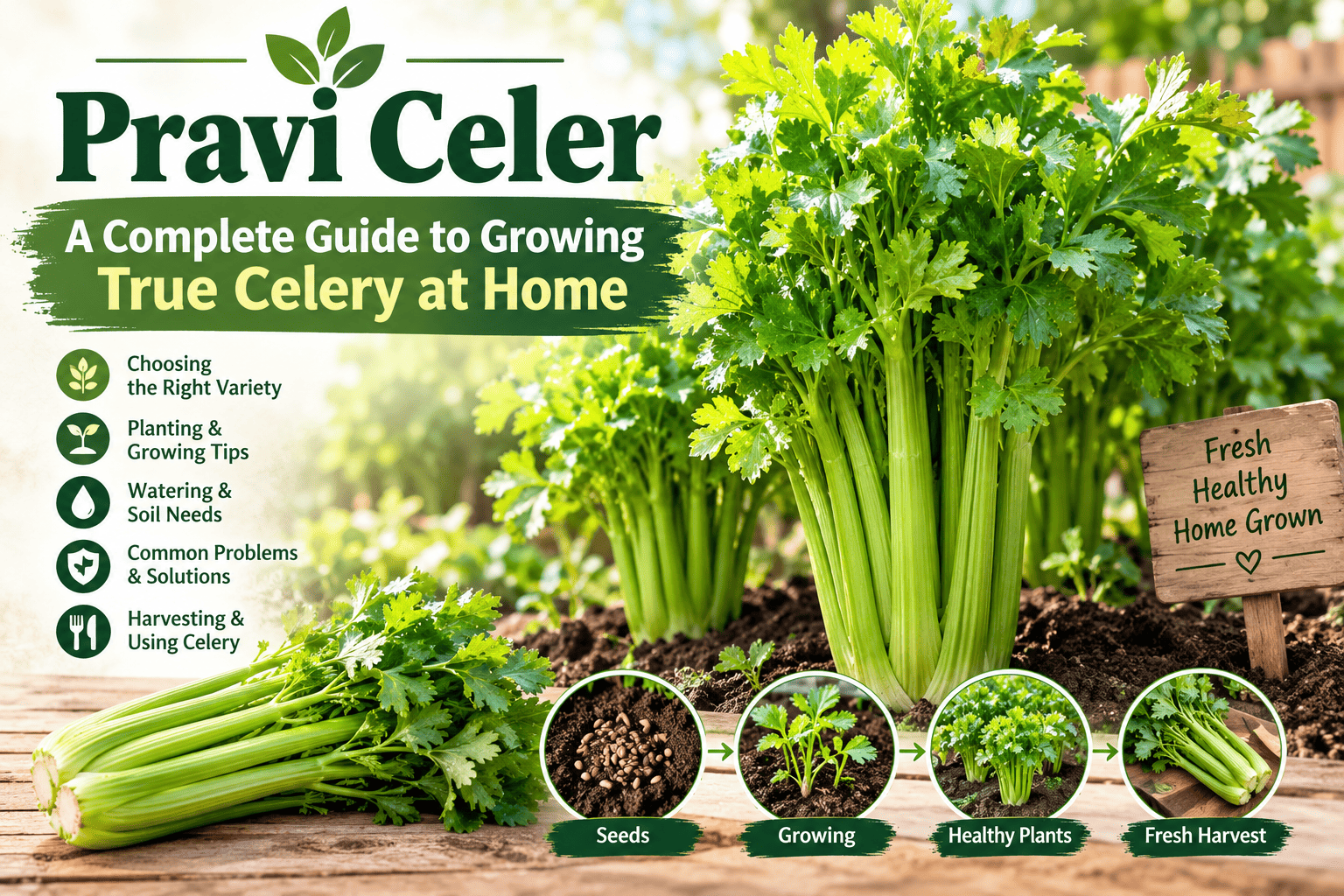
Growing Pravi Celer at home can be a rewarding experience if you understand what this plant needs to produce healthy, crisp stalks. Celery is often considered a slightly challenging vegetable because it prefers consistent moisture, fertile soil, and a relatively cool growing environment. However, with the right planting method and regular care, home gardeners can successfully grow celery in garden beds or containers.
Whether you are starting celery from seed, growing it in a backyard garden, or trying container gardening, this guide explains the essential steps from planting to harvesting. You will learn how to choose the right location, prepare the soil, water the plants, protect them from common problems, and harvest fresh stalks at the right time.
What Is Pravi Celer?
Pravi Celer, when used to refer to true celery, is associated with the common celery plant, botanically known as Apium graveolens. Celery is a member of the Apiaceae family, which also includes plants such as carrots, parsley, fennel, and dill. It is primarily grown for its crunchy stalks, although its leaves can also be used for flavoring soups, sauces, stocks, and other dishes.
Celery is generally grown as an annual vegetable even though it is technically a biennial plant. It needs a relatively long growing period, and successful cultivation depends heavily on keeping the plants supplied with water and nutrients.
Why Grow Pravi Celer at Home?
One of the biggest advantages of growing celery yourself is freshness. Homegrown stalks can be harvested when needed, giving you a crisp ingredient for salads, soups, stews, stir-fries, and juices.
Growing your own celery also gives you greater control over the growing conditions. You can improve the soil with compost, maintain consistent moisture, and choose whether to grow traditional or self-blanching types depending on your gardening goals.
Celery does require more attention than some easy vegetables, but its basic requirements are straightforward: rich soil, adequate sunlight, cool conditions, and plenty of moisture.
Best Growing Conditions for Pravi Celer
Choosing the right location is one of the most important steps. Celery generally performs best in a sunny location with fertile soil that can retain moisture without becoming poorly drained. The plant has relatively shallow roots, so the soil around it should not be allowed to dry out.
In warmer climates, excessive heat can make celery more difficult to grow. A location with morning sun and some protection from intense afternoon heat may be useful when temperatures become high. In cooler climates, full sun is generally suitable.
Ideal conditions include:
- Fertile soil rich in organic matter
- Consistent soil moisture
- Good drainage
- Plenty of natural light
- Protection from prolonged cold
- A long enough growing season for the variety
The most important point is consistency. Sudden changes in temperature or moisture can affect growth and may contribute to problems such as premature flowering.
How to Prepare Soil for Celery
Before planting, prepare the soil by removing weeds and loosening the growing area. Adding well-rotted compost or other organic matter can improve fertility and help the soil hold moisture.
Celery prefers nutrient-rich soil, so poor soil should be improved before planting rather than expecting young plants to perform well in depleted ground. The RHS also recommends preparing the ground with plenty of well-rotted manure or garden compost where appropriate.
Avoid soil that becomes waterlogged for long periods. Celery needs plenty of moisture, but its roots still require adequate air and healthy drainage.
How to Grow Pravi Celer From Seed
Starting celery from seed requires patience because the seeds are small and germination can be slow. For this reason, many gardeners start the plants indoors or in a protected growing area before moving them outdoors.
Sow the seeds lightly on the surface of moist seed-starting compost because celery seeds need light to germinate. Keep the growing medium consistently moist and place the seed tray somewhere warm and bright. The RHS notes that temperatures of at least about 15°C can support germination, while germination may take up to three weeks.
Once seedlings develop several true leaves and become large enough to handle, they can be moved into individual pots or modules. Give them plenty of light and water regularly while they develop.
Because celery has a long growing season, starting seeds early can give plants more time to reach harvestable size. The Old Farmer’s Almanac recommends starting seeds indoors roughly 10–12 weeks before the appropriate outdoor planting or frost date.
When to Plant Pravi Celer
The best planting time depends on your local climate. Celery generally prefers cool growing conditions and can struggle when exposed to prolonged heat or cold.
In cooler regions, gardeners commonly start plants early and transplant them after the danger of severe frost has passed. In warmer regions, growing celery during a cooler part of the year may be more successful.
Young celery plants are particularly sensitive to cold. Extended exposure to low temperatures can encourage bolting, which means the plant begins flowering prematurely instead of developing the desired stalks.
How to Plant Celery in the Garden
Before transplanting, gradually acclimate indoor-grown seedlings to outdoor conditions. This process, known as hardening off, helps reduce transplant shock.
Plant the young celery into prepared soil and water thoroughly after planting. For block planting, plants can be spaced around 23 cm apart, although exact spacing should depend on the variety and growing method.
Planting in a block rather than a single widely spaced row can also help plants shade each other and may reduce the amount of light reaching the stalks.
After planting, apply mulch around the plants. Mulch can help conserve soil moisture and reduce competition from weeds, which is particularly useful because celery needs a steady supply of water throughout its growing period.
How Often Should You Water Pravi Celer?
Watering is arguably the most important part of celery care. The soil should remain consistently moist throughout the growing season. If celery experiences repeated periods of drought, the stalks can become smaller, tougher, or stringier.
Rather than allowing the soil to become very dry and then applying a large amount of water, aim for steady moisture. Mulching can help reduce evaporation, especially during warm weather.
Container-grown celery may require even more frequent watering because containers can dry out faster than garden soil.
Fertilizing Pravi Celer
Celery grows best when supplied with adequate nutrients. Compost added before planting can provide organic matter and nutrients, while additional feeding may be useful if the soil is poor.
Avoid excessive fertilizer. The goal is healthy, steady growth rather than forcing the plants to grow too quickly. A balanced feeding approach can be especially useful for container-grown plants, where nutrients can be depleted more quickly.
Always follow the instructions on any commercial fertilizer you use, particularly regarding application rates and timing.
Growing Pravi Celer in Containers
You do not need a large garden to grow celery. It can also be grown in containers as long as the container is large enough and has good drainage.
Choose a container filled with quality potting mix and place it somewhere that receives sufficient sunlight. Because containers dry out faster than garden beds, regular watering is particularly important. The RHS recommends spacing container-grown celery plants about 23 cm apart and emphasizes generous watering during the growing season.
A container can be a convenient option for balconies, patios, and small gardens, but it requires more attention to moisture levels.
Does Pravi Celer Need Blanching?
Blanching is a traditional technique used to reduce the amount of light reaching celery stalks. This can make some celery varieties milder and more tender.
Self-blanching varieties generally require less work because their growth habit naturally reduces the amount of light reaching the stalks. For traditional varieties, gardeners can use methods such as wrapping the stalks with paper or cardboard or gradually covering them with soil, depending on the variety.
If you prefer stronger-flavored green celery, blanching may not be necessary. The choice depends on the variety and the flavor and appearance you want.
Common Problems When Growing Celery
Celery can encounter several common gardening problems, particularly when plants are stressed by poor moisture management, unsuitable temperatures, or pests.
Bolting
Bolting happens when celery begins flowering earlier than expected. Cold stress during the young plant stage can increase the risk. Protecting young plants from prolonged cold and choosing suitable varieties can help reduce the problem.
Stringy Stalks
Stringy or tough stalks are often associated with inadequate moisture or plants being left too long before harvest. Keeping the soil consistently moist is one of the best ways to encourage tender growth.
Slugs and Snails
Slugs and snails can damage young celery plants. Check plants regularly, remove hiding places around the growing area, and use appropriate garden pest-management methods when necessary.
Leaf Problems
Celery can also experience leaf-related pests and diseases. Damaged or spotted leaves should be monitored and removed when appropriate. Good spacing, proper watering practices, and clean garden conditions can help maintain healthier plants.
When to Harvest Pravi Celer
Celery can be harvested once the stalks have reached a useful size and before they become overly mature and stringy. Harvesting time varies according to the variety, climate, and planting date.
You can harvest individual outer stalks as needed or harvest the entire plant. Picking individual stalks can allow the plant to continue producing for longer. The Old Farmer’s Almanac notes that young celery can also be harvested and that stalks can be picked from the outside inward.
For the best texture, harvest celery while the stalks are crisp and well hydrated.
How to Store Fresh Celery
After harvesting, remove damaged leaves and store the stalks in the refrigerator. Keeping celery cool helps maintain its crisp texture.
If you have more celery than you can use immediately, it can also be prepared for cooking and frozen. However, freezing changes the texture, so frozen celery is generally more suitable for soups, stews, sauces, and cooked dishes than fresh salads.
Tips for Successfully Growing Pravi Celer
For beginners, the following principles make celery cultivation much easier:
- Start seeds early enough to provide a long growing period.
- Use fertile soil with plenty of organic matter.
- Keep the soil consistently moist.
- Protect young plants from prolonged cold.
- Avoid allowing weeds to compete for water and nutrients.
- Use mulch to help conserve moisture.
- Monitor plants regularly for pests and leaf problems.
- Harvest stalks before they become excessively mature or stringy.
The biggest lesson is that celery should not be treated like a drought-tolerant vegetable. Consistent moisture is one of the main requirements for producing quality stalks.
Frequently Asked Questions About Pravi Celer
Is Pravi Celer easy to grow?
Celery is not usually considered one of the easiest vegetables for beginners because it needs consistent moisture, fertile soil, and a sufficiently long growing season. However, it becomes much easier when these requirements are understood and maintained.
Can Pravi Celer grow in pots?
Yes. Celery can be grown in containers provided there is enough space, good-quality growing medium, adequate sunlight, and regular watering.
How much sunlight does celery need?
Celery generally grows well in full sun, although growing conditions vary with climate. In very hot areas, some protection from intense afternoon heat may help reduce plant stress.
How long does celery take to grow?
Celery is a long-season crop. Depending on the variety and growing conditions, it can take several months from sowing to harvest. Some varieties may require around 10–12 weeks or longer after starting, while others can take considerably more time.
Why is my celery thin and stringy?
Insufficient moisture is a common reason celery fails to develop thick, tender stalks. Keeping the soil consistently moist throughout the growing season is essential.
Final Thoughts
Growing Pravi Celer at home is achievable when you focus on the plant’s basic needs rather than treating it like a low-maintenance vegetable. Start with healthy seeds or seedlings, prepare fertile soil, provide sufficient light, and most importantly, maintain consistent moisture.
Temperature management also matters, particularly during the early stages. With regular care and timely harvesting, you can grow crisp celery for salads, soups, stews, and many other recipes directly from your own garden or container.
The key to successful celery growing is simple: rich soil, steady moisture, suitable temperatures, and patience. Give the plants those conditions, and your homegrown Pravi Celer can become a productive and useful addition to your vegetable garden.