
Introduction
Recycling has become an important part of modern waste management as households, businesses, and communities look for practical ways to reduce waste and conserve natural resources. From plastic packaging and cardboard to glass containers and electronic equipment, many discarded materials can be recovered and used again when they are handled correctly. As environmental awareness grows, digital platforms and emerging technologies are also changing how people learn about recycling and manage waste.
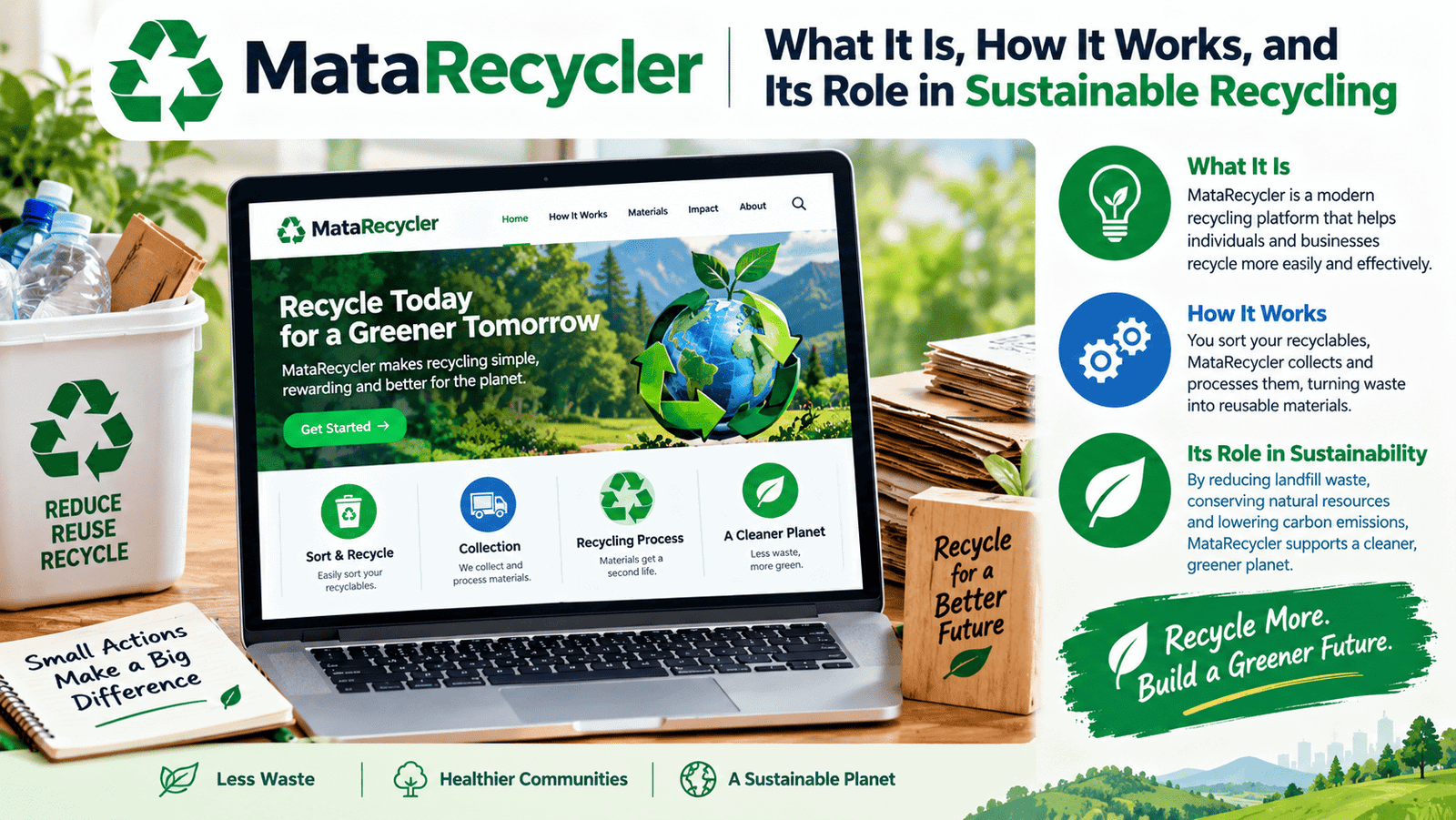
MataRecycler is a name associated with recycling education, environmental awareness, and sustainable practices. The website using this name presents information about recycling methods, waste reduction, reuse, and environmentally responsible choices. However, some online articles describe MataRecycler as an advanced artificial intelligence (AI) recycling system, creating confusion about whether it is an educational website or a specific technological product. Its published website information supports the educational-platform description, while the more detailed claims about a dedicated commercial recycling machine remain unverified.
Understanding this distinction helps readers explore MataRecycler without confusing general recycling technology with the capabilities of a particular product. It also provides an opportunity to examine how responsible recycling works, why smart waste management matters, and how individuals can make more informed environmental decisions.
What Is MataRecycler?
MataRecycler is primarily associated with an online platform that shares information about recycling, sustainability, waste management, and environmental responsibility. Its website describes a mission to make recycling knowledge accessible and useful for individuals, businesses, and communities interested in reducing waste and adopting more sustainable practices.
The platform’s stated focus includes explaining recycling processes, encouraging reuse, and helping readers understand environmentally responsible alternatives. This type of educational content can be useful for people who want to learn which materials may be recyclable, how waste should be separated, and why responsible disposal matters.
The name has also appeared in online discussions about smart recycling technology. Some third-party articles associate it with automated sorting, sensors, computer vision, and AI-powered waste management. Although these technologies are used in the wider recycling industry, the available information does not establish that one officially documented MataRecycler product provides all these features.
For that reason, it is more accurate to understand MataRecycler as a recycling-related information platform and concept rather than assume it is a verified commercial machine or software service.
How Does MataRecycler Relate to Modern Recycling?
Modern recycling involves more than placing waste in a separate container. It requires suitable collection systems, correct sorting, appropriate processing facilities, and markets for recovered materials. Educational platforms such as MataRecycler can help readers understand these stages and make better decisions about everyday waste.
Waste Reduction and Reuse
Reducing waste at its source is one of the most practical ways to support sustainability. People can avoid unnecessary packaging, choose reusable products, repair suitable household items, and donate belongings that remain in good condition. These actions may reduce the amount of material that needs to be collected, transported, and processed.
Reuse also helps extend the useful life of products. For example, a sturdy container may serve another purpose, while usable furniture can be passed to another household instead of being discarded. Such decisions support responsible resource use without requiring complicated technology.
Better Waste Separation
Separating recyclable materials from general rubbish helps recycling facilities process waste more efficiently. Paper, cardboard, metals, glass, and different types of plastic may require different handling methods. Food residue, unsuitable packaging, and mixed materials can also affect whether an item is accepted by a local recycling programme.
Readers should follow the instructions provided by their local waste collection service rather than assume that every item displaying a recycling symbol belongs in the same bin. Recycling rules can vary by location and facility.
Environmental Awareness
Recycling education helps people understand how their daily habits affect resource consumption and waste generation. Clear information can explain why some materials are easier to recycle than others, why contamination creates problems, and why reducing unnecessary consumption is also important.
By making these topics easier to understand, recycling-focused educational resources can support better household practices and encourage communities to take environmental responsibility seriously.
What Is Smart Recycling Technology?
Smart recycling refers to the use of technology to improve the identification, collection, sorting, monitoring, or processing of waste. Unlike conventional recycling systems that rely heavily on manual sorting and established mechanical processes, some modern facilities combine automation, digital monitoring, and data analysis to support their operations.
These technologies exist independently of the MataRecycler name. Their real-world applications help explain why online articles sometimes associate the keyword with advanced waste-management systems.
Artificial Intelligence and Computer Vision
AI-powered computer vision can analyse images of discarded materials and help identify categories such as plastic containers, paper, metal objects, or other waste. Depending on the system, this information can support automated sorting equipment or help operators monitor the composition of incoming waste.
The effectiveness of such systems depends on factors including image quality, lighting, material condition, contamination, and the range of items used to train or configure the technology. AI can assist recycling operations, but it does not automatically make every material recyclable or eliminate the need for appropriate processing facilities.
Sensors and Automated Sorting
Some recycling facilities use optical sensors, magnets, air jets, conveyor systems, and robotic equipment to separate different materials. For example, magnets can help recover certain ferrous metals, while optical sorting equipment can distinguish selected materials based on their physical or optical properties.
Automation can reduce some repetitive manual tasks and improve sorting consistency under suitable operating conditions. However, equipment requirements vary according to the waste stream, facility design, and types of materials being processed.
There is currently insufficient verified product documentation to attribute a particular combination of these features specifically to MataRecycler.
Digital Monitoring and Waste Data
Waste-management organisations can use digital systems to record collection volumes, monitor bin capacity, track material recovery, and identify operational problems. Analysing this information may help operators plan collection schedules, allocate resources, and assess changes in recycling performance.
These applications illustrate how digital technology can support environmental management. They should not, however, be confused with confirmed features of MataRecycler unless reliable product documentation establishes that connection.
Potential Benefits of Recycling and Sustainable Waste Management
The benefits of recycling depend on the materials involved, the collection system, and the processing methods used. When properly designed and managed, recycling programmes can provide several environmental and operational advantages.
Conserving natural resources: Recovering suitable materials can reduce the need to obtain new raw materials. Recycled metals, paper fibres, and glass may be used in manufacturing processes, depending on material quality and industry requirements.
Reducing waste sent to landfills: Recycling can divert accepted materials from disposal facilities. The actual impact depends on local collection coverage, contamination levels, processing capacity, and whether recovered materials can be used again.
Supporting more efficient waste operations: Well-organised sorting and collection systems can help reduce unnecessary handling and improve the recovery of useful materials. In facilities that adopt appropriate automation, technology may also help improve consistency and operational planning.
Encouraging responsible consumer habits: Accessible information can help people make informed purchasing decisions, reuse products where possible, and follow local disposal rules. These small actions can contribute to broader environmental goals when adopted across households and communities.
Improving environmental awareness: Recycling education helps explain the relationship between consumption, waste generation, resource use, and environmental protection. Better understanding can encourage participation in local sustainability initiatives.
These are general benefits of effective recycling and waste management. They should not be interpreted as measured results achieved by a specific MataRecycler product.
Is MataRecycler an AI-Powered Recycling Machine?
This is one of the most important questions surrounding the keyword. Some websites describe MataRecycler as a sophisticated system that uses AI, cameras, sensors, and automated equipment to identify and separate waste. Other descriptions associate the name with digital recycling services or mobile applications.
The difficulty is that these descriptions do not consistently identify the same product. The available primary website information focuses on recycling education and sustainability rather than presenting a clearly documented machine with a manufacturer, model number, technical specifications, or independently verified installations.
This does not mean that AI-powered recycling is fictional. Automated waste identification and sorting are established areas of technology, and various facilities use related systems. The distinction is that the existence of these technologies does not prove that a particular product called MataRecycler incorporates them.
Anyone researching the name should therefore distinguish between general descriptions of smart recycling and verified information about a specific product. Until reliable documentation confirms the claimed features, precise performance figures and product capabilities should be treated cautiously.
What Should You Check Before Trusting MataRecycler Claims?
When evaluating a website or a recycling technology mentioned online, it is helpful to examine the evidence behind its claims rather than relying on repeated descriptions across multiple articles.
Start by checking the website’s own description of its purpose. An educational platform, a recycling equipment manufacturer, and a waste-management service are different types of organisations, and each should provide information appropriate to its activities.
If a page claims that MataRecycler is a commercial machine, look for a named manufacturer, technical documentation, operating instructions, safety information, and credible examples of installations. If it is presented as an app, check whether the developer and the claimed features can be independently verified.
Performance statistics also deserve careful attention. Claims about sorting accuracy, landfill reduction, or increased recycling rates should identify the study, testing conditions, measurement period, and source of the data. A numerical claim without supporting evidence is not enough to establish that a product performs as advertised.
Finally, distinguish between the existence of a website and the verification of a business or product. A website can publish useful educational information without manufacturing equipment, and an online description alone does not establish commercial availability or proven results.
How Individuals Can Practise Better Recycling
People do not need advanced equipment to begin improving their recycling habits. A few consistent practices can make household waste management more organised and reduce avoidable mistakes.
Begin by learning which materials your local recycling service accepts. Keep suitable recyclables separate from general rubbish, and follow instructions about rinsing containers, flattening cardboard, or separating components when required. Avoid placing contaminated or prohibited items in recycling containers simply because they appear recyclable.
Reuse products when it is practical and safe to do so. Shopping bags, storage containers, and durable household items may have useful lives beyond their original purpose. Repairing suitable products or passing usable belongings to others can also reduce unnecessary disposal.
Electronic waste requires particular care because batteries, cables, appliances, and electronic devices may contain materials that need specialised handling. Use authorised collection points or designated recycling services where available rather than mixing electronic waste with ordinary household rubbish.
It is also worth remembering that recycling is only one part of sustainability. Buying only what is needed, choosing durable products, reducing food waste, and avoiding unnecessary packaging can help prevent waste before it is created.
MataRecycler and the Future of Sustainable Waste Management
The future of recycling will likely involve a combination of public education, improved collection systems, material recovery, automation, and better waste data. Digital platforms can help people understand responsible disposal, while appropriately designed technology can support the practical work carried out by recycling facilities.
However, successful recycling depends on more than technology alone. It also requires reliable infrastructure, suitable processing capacity, consistent public participation, effective policies, and demand for recovered materials. Even advanced sorting equipment has limited value when materials cannot be collected properly or reused economically.
MataRecycler is relevant to this broader discussion because its stated educational focus connects with the need for accessible recycling information. Readers interested in its potential technological meaning should continue to distinguish between general developments in smart waste management and specific features that have been independently confirmed for a named product.
As sustainability becomes a greater priority for communities and organisations, accurate information will remain essential. Understanding what is documented, what is technically possible, and what remains unverified allows readers to make better decisions about recycling initiatives and environmental technology.
Frequently Asked Questions
1. What is MataRecycler?
MataRecycler is a name associated with an online platform that shares information about recycling, sustainability, waste reduction, and environmental awareness. Some third-party websites also associate it with smart recycling technology, although a specific commercial system has not been clearly verified.
2. Is MataRecycler a real recycling machine?
Available information does not establish a specific physical recycling machine under the MataRecycler name. The educational website exists, but claims about a dedicated AI-powered machine require further reliable evidence.
3. Does MataRecycler use artificial intelligence?
Some online descriptions connect MataRecycler with AI, sensors, computer vision, and automated waste sorting. However, those features have not been established as capabilities of one officially documented MataRecycler product.
4. How does smart recycling technology work?
Smart recycling systems may use cameras, sensors, computer vision, automated sorting equipment, and data analysis to help identify and separate waste. Their performance depends on the materials, equipment, operating conditions, and recycling facility.
5. What are the main benefits of recycling?
Effective recycling can conserve natural resources, reduce the amount of suitable waste sent to landfills, recover valuable materials, and support more responsible consumption. The benefits depend on proper collection, sorting, and processing.
6. Is MataRecycler a website or a company?
The available primary information supports its identity as an informational platform. A separate, verified commercial recycling business or manufacturer operating under the same name has not been established by the evidence reviewed.
7. How can people improve their recycling habits?
People can follow local recycling rules, separate accepted materials correctly, reuse suitable products, reduce unnecessary packaging, and use designated collection services for electronic waste and other materials requiring specialised handling.
Conclusion
MataRecycler is associated with recycling education, sustainability, and environmental awareness, while online descriptions have also connected the name with advanced recycling technology. The clearest available information supports its role as an informational platform, not a confirmed manufacturer of AI-powered recycling equipment.
Smart sorting systems, sensors, computer vision, and automated waste-management tools are genuine technologies that can improve recycling operations in appropriate settings. However, their existence should not be used as proof that every feature attributed to MataRecycler belongs to a verified product.
For readers, the most useful approach is to focus on reliable information, understand local recycling requirements, and recognise the difference between established technology and unconfirmed product claims. Better waste separation, reuse, and responsible consumption remain practical ways to support sustainability, regardless of whether a particular recycling technology is involved.