

Introduction
A comfortable home is more than just a place to relax. It should maintain a pleasant indoor temperature, protect you from extreme weather, and help you manage your energy expenses. However, when a house has poor insulation, outdoor heat can enter during summer, while indoor warmth can escape during winter. This can make rooms uncomfortable and force air conditioners or heating systems to work harder.
Learning how to improve home insulation can help you create a more energy-efficient living space without necessarily undertaking a complete renovation. Simple improvements, such as sealing gaps around doors, installing thermal curtains, and improving roof insulation, can make a meaningful difference when they address the right problems.
Home insulation works by slowing the transfer of heat through roofs, walls, floors, windows, and other parts of a building. The effectiveness of an insulation upgrade depends on the materials used, the local climate, the building’s design, and the quality of installation.
In this guide, you will discover nine practical ways to improve home insulation, choose appropriate materials, avoid common mistakes, and make sensible decisions based on your budget.
What Is Home Insulation?
Home insulation is a method of reducing the movement of heat between the inside and outside of a building. It helps keep indoor spaces cooler during hot weather and warmer during cold weather.
Different parts of a house require different insulation solutions. Roof insulation reduces heat transfer through the roof, wall insulation slows heat movement through exterior walls, and floor insulation can improve comfort in homes with exposed or unheated spaces underneath.
Air sealing is another important part of home efficiency. Although insulation and air sealing perform different functions, they work best together. Insulation slows heat transfer, while air sealing reduces unwanted airflow through cracks and openings.
A properly planned insulation system can provide several benefits:
- Improve indoor comfort throughout the year.
- Reduce unwanted heat entering the house during summer.
- Help retain indoor warmth during colder months.
- Potentially lower heating and cooling expenses.
- Reduce drafts and temperature differences between rooms.
- Support better moisture management when correctly designed.
- Improve the overall energy efficiency of the property.
The results vary from one home to another, so identifying the most significant problems is essential before choosing an upgrade.
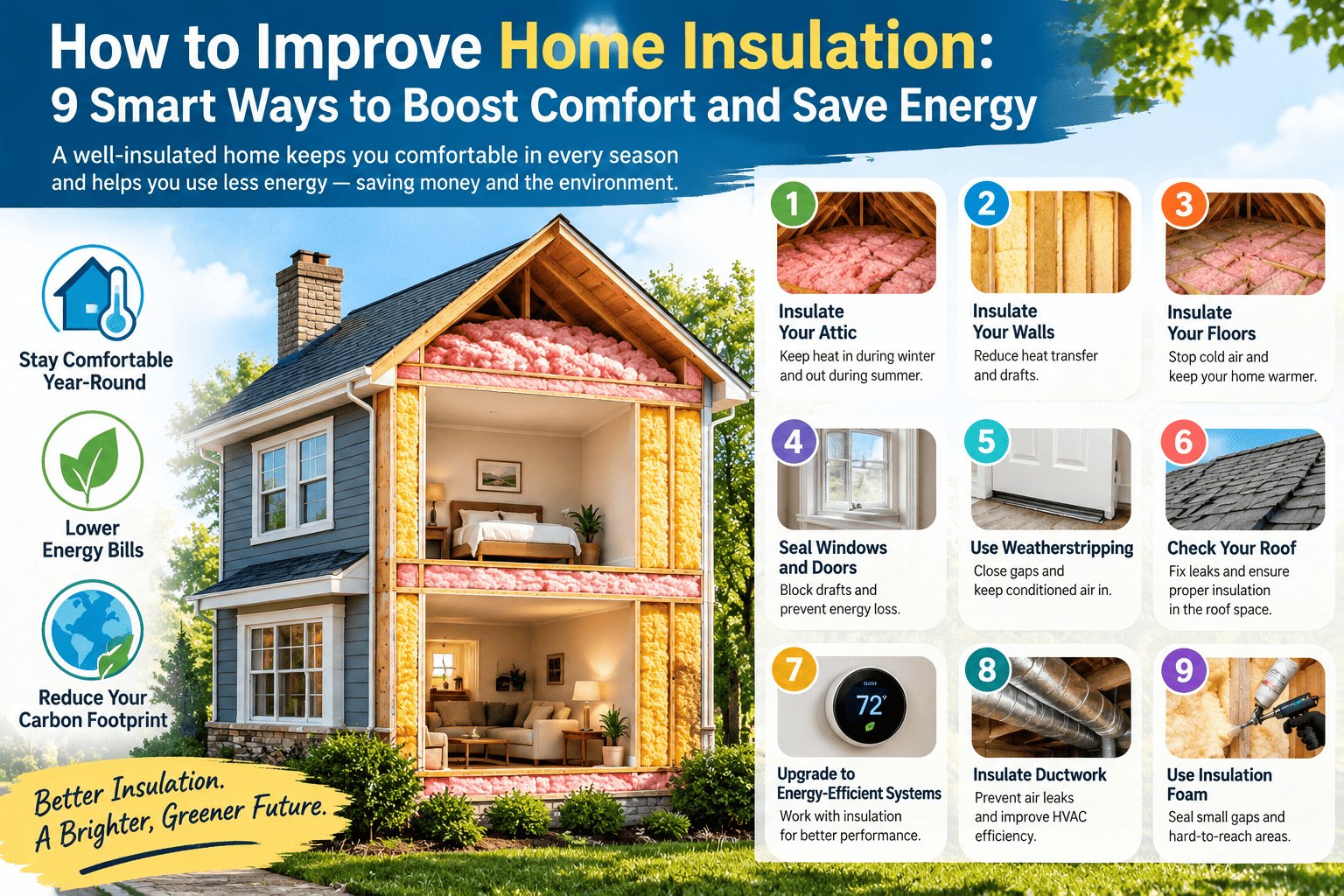
1. Improve Roof and Attic Insulation
The roof is one of the most important areas to inspect when improving home insulation. In hot climates, sunlight can heat the roof surface, allowing heat to transfer into the rooms below. In colder climates, inadequate roof insulation can allow indoor warmth to escape.
If the rooms beneath your roof become particularly hot during the afternoon, insufficient roof or ceiling insulation could be contributing to the problem.
How to Improve Roof Insulation
Start by examining the roof or attic space, if it is safely accessible. Look for missing insulation, damaged materials, gaps, and signs of moisture.
Consider these practical improvements:
- Install suitable insulation between roof rafters or above the ceiling.
- Use materials designed for the roof’s construction and local climate.
- Seal appropriate gaps around pipes and other penetrations.
- Repair roof leaks before installing new insulation.
- Maintain the ventilation required by the roof design.
- Avoid blocking ventilation openings with insulation.
Common options include mineral wool, fiberglass, rigid insulation boards, and other products designed for roof applications.
Homes with flat concrete roofs may benefit from a different insulation arrangement than houses with pitched roofs and accessible attics. The correct method depends on the existing structure, waterproofing system, and moisture conditions.
Practical tip: If your upstairs rooms become much hotter than the rest of the house, assess the roof and ceiling before spending money on smaller improvements elsewhere.
2. Seal Gaps Around Windows and Doors
Small gaps around windows and doors can allow outdoor air to enter and conditioned air to escape. During hot weather, unwanted airflow can introduce warm air into the house. During winter, it can allow heated indoor air to escape.
Sealing these openings is often one of the simplest ways to improve home insulation and indoor comfort.
Steps to Reduce Air Leakage
Inspect window frames: Look for cracks, damaged seals, and gaps between frames and surrounding walls.
Install weatherstripping: Apply suitable weatherstripping to moving joints around windows and doors.
Use appropriate caulk: Seal small, stationary gaps where the material is suitable for the surface.
Add door sweeps: A properly fitted door sweep can reduce the gap beneath an exterior door.
Check the seals regularly: Replace weatherstripping when it becomes loose, brittle, or damaged.
Larger openings may require more substantial repairs rather than simply applying caulk. Do not seal intentional drainage openings or ventilation routes.
It is also important to preserve the ventilation required by kitchens, bathrooms, and fuel-burning appliances.
Why it matters: Reducing unwanted airflow helps insulation work more effectively and may decrease the amount of energy needed to maintain a comfortable indoor temperature.
3. Upgrade Exterior Wall Insulation
Exterior walls form a large part of a building’s outer surface. When they lack adequate insulation, heat can move between indoor and outdoor spaces, contributing to uncomfortable rooms and higher cooling or heating requirements.
Improving wall insulation can be especially useful during major renovations, when walls are already being opened or exterior cladding is being replaced.
Common Wall Insulation Options
Fiberglass insulation: Often used in suitable wall cavities and installed between structural framing.
Mineral wool: Provides thermal insulation and can offer useful fire-performance characteristics, depending on the product.
Blown-in insulation: Can be suitable for certain existing enclosed wall cavities when installed using an appropriate method.
Rigid insulation boards: May be installed as part of an interior or exterior insulation system.
Spray foam insulation: Can provide insulation and air sealing in suitable applications, but requires careful product selection and installation.
Before upgrading wall insulation, investigate water leaks, dampness, and existing wall conditions. Installing insulation over unresolved moisture problems can increase the risk of condensation, material damage, and mold.
For existing homes, exterior insulation may be practical when the outside walls are being renovated. Interior insulation is another possibility, although it can reduce usable room space and require adjustments to electrical fittings and interior finishes.
Practical tip: If you are planning a renovation, evaluate wall insulation before closing the walls again. This can reduce the need for expensive work later.
4. Install Thermal Curtains and Insulated Window Coverings
Windows can contribute to unwanted heat gain during summer and heat loss during colder weather. The amount depends on the glass, frame, window orientation, and quality of the seals.
Thermal curtains are a relatively accessible improvement because they can enhance comfort without requiring you to replace the entire window.
Ways to Improve Window Insulation
- Choose curtains with a suitable thermal lining.
- Use coverings wide enough to extend beyond the window edges.
- Close curtains when direct sunlight is heating the room during summer.
- Open curtains when sunlight can provide useful warmth in colder weather.
- Consider cellular blinds or other insulated window coverings.
- Repair damaged window seals and frames where necessary.
In hot climates, reflective blinds, exterior shutters, awnings, and solar screens can also help reduce heat entering through windows.
Exterior shading is particularly useful because it blocks some sunlight before it reaches the glass.
However, window coverings cannot fully compensate for seriously damaged frames or poorly insulated windows. If your windows are old or inefficient, compare the potential benefits of repairing seals, improving coverings, or upgrading the glazing.
Budget-friendly tip: Start with windows that receive strong afternoon sunlight or produce noticeable drafts.
5. Insulate Floors and Reduce Cold Drafts
Floor insulation can improve comfort in homes with raised timber floors, exposed underfloor areas, unheated basements, or crawl spaces.
When floors feel unusually cold, the problem may involve heat transfer through the floor structure or air entering through gaps.
How to Improve Floor Insulation
- Install suitable insulation between accessible floor joists.
- Seal appropriate gaps around floor penetrations.
- Check for drafts around floor edges and skirting boards.
- Repair water leaks and moisture problems beneath the house.
- Ensure insulation is properly supported and protected.
- Choose materials appropriate for the floor’s construction.
Homes built directly on concrete slabs require a different approach from houses with raised timber floors. Retrofitting insulation beneath an existing slab may be difficult, so other improvements may be more practical.
Rugs and carpets can make floors feel warmer, but they provide only supplementary insulation compared with a properly designed floor insulation system.
If the area beneath your house is damp, poorly ventilated, or difficult to access, professional advice can help you choose an appropriate solution.
6. Choose the Right Insulation Materials
Selecting suitable insulation materials is essential for long-term performance. Different products have different thermal properties, installation requirements, costs, and moisture-management characteristics.
The best choice depends on where the insulation will be installed and the conditions it will face.
Common Types of Home Insulation
Fiberglass: Commonly used in attics, ceilings, and suitable wall cavities. It must be installed correctly to avoid gaps and unnecessary compression.
Mineral wool: Used in walls, roofs, and floors. Depending on the product, it can provide useful thermal and fire-performance properties.
Cellulose: Often installed as loose-fill or blown-in insulation in appropriate attics and enclosed wall cavities.
Rigid foam boards: Used in selected roof, wall, and floor applications. Joints and edges need appropriate detailing.
Spray foam: Used in specific building assemblies where its thermal, air-sealing, and moisture characteristics are suitable. Installation may require specialist equipment and safety precautions.
Reflective insulation: Can help reduce radiant heat transfer in suitable applications, particularly when installed with the required air space.
What Should You Consider Before Buying?
Check the product’s stated thermal resistance, recommended thickness, fire characteristics, moisture suitability, and installation instructions.
Thermal resistance is commonly expressed as an R-value in some countries. A higher R-value generally indicates greater resistance to heat flow at the stated thickness.
Do not choose insulation based only on price. A less expensive material may be unsuitable for a damp location, a roof assembly, or an area requiring particular fire protection.
Compare products according to their intended use and ensure that the entire building assembly is designed to manage heat, air, and moisture appropriately.
7. Reduce Heat Gain Through the Roof and Exterior
Insulation slows heat transfer, but reducing the amount of heat reaching your house can provide additional benefits. This is particularly important in areas that experience long, hot summers.
Sunlight can heat roof surfaces, exterior walls, and windows. When these surfaces become hot, some of that heat moves into the building.
Practical Ways to Reduce Heat Gain
Choose suitable roofing materials: Reflective roof finishes may reduce solar heat absorption in appropriate climates.
Add exterior shading: Awnings, shutters, and shade structures can reduce direct sunlight through windows.
Plant trees strategically: Well-positioned trees can provide shade, provided they do not threaten foundations, roofs, or utility lines.
Improve roof insulation: Insulation helps slow the movement of heat from the roof into living spaces.
Seal exterior openings: Appropriate sealing around cables, pipes, and other penetrations can reduce unwanted airflow.
In hot climates, these measures can complement insulation by reducing the amount of heat entering the building.
Before applying a roof coating, make sure it is compatible with the roofing material and existing waterproofing system. Roof drainage and maintenance requirements must also be considered.
The best results usually come from combining appropriate shading, insulation, and air sealing rather than relying on one improvement alone.
8. Control Moisture and Maintain Proper Ventilation
Good insulation should improve comfort without creating moisture problems. Everyday activities such as cooking, showering, and drying clothes release water vapor into indoor air.
If moisture becomes trapped inside walls, roofs, or other building components, it can contribute to condensation, mold, and damage to construction materials.
How to Protect Your Home
- Repair plumbing leaks and roof damage before insulating.
- Use suitable exhaust ventilation in bathrooms and kitchens.
- Maintain the ventilation required by the roof and building design.
- Avoid blocking necessary air vents.
- Investigate persistent condensation, damp patches, and musty odors.
- Select vapor-control materials appropriate for the local climate.
- Follow product instructions for installation and moisture protection.
A tightly sealed home still requires adequate ventilation. Depending on the building and climate, a planned mechanical ventilation system may be appropriate.
Do not assume that every roof or wall requires the same ventilation arrangement. Some insulated assemblies use specific designs that control moisture without conventional ventilation paths.
If mold or dampness is already present, identify and correct the underlying cause before covering the affected area with new insulation.
9. Arrange a Home Energy Assessment
If you are uncertain where your house loses the most energy, a home energy assessment can help you prioritize improvements.
A qualified professional can inspect the roof, walls, windows, doors, floors, and ventilation arrangements. The assessment may also identify air leaks and insulation deficiencies that are difficult to recognize through a basic visual inspection.
Some professionals use thermal imaging cameras to identify temperature differences across surfaces. A blower-door test may also be used to measure building air leakage.
How to Prioritize Your Improvements
First, address urgent problems. Repair roof leaks, water damage, unsafe electrical conditions, and other issues that could affect the building’s safety or durability.
Second, seal obvious air leaks. Weatherstripping, suitable caulking, and door sweeps may provide relatively inexpensive improvements.
Third, inspect roof and ceiling insulation. These areas can be important sources of heat transfer, depending on the building.
Fourth, assess windows and exterior shading. Improve window coverings and seals before considering more expensive replacements.
Fifth, evaluate walls and floors. Larger insulation projects may be worthwhile when existing insulation is inadequate.
This order is only a general guide. A professional assessment may reveal that another part of your house deserves attention first.
Before hiring a contractor, request a clear written estimate covering materials, installation methods, expected thermal performance, and any necessary ventilation or moisture-control work.
Common Home Insulation Mistakes to Avoid
Even high-quality insulation may perform poorly when installed incorrectly. Avoiding common mistakes can help protect your home and your investment.
Ignoring Air Leaks
Adding insulation without addressing major gaps can leave significant sources of unwanted airflow unresolved.
Choosing Materials Only by Price
The cheapest material may not provide the right thermal performance or moisture resistance for your building.
Blocking Required Ventilation
Blocking necessary vents can contribute to moisture problems and may create safety hazards around fuel-burning equipment.
Installing Insulation Over Damp Surfaces
Moisture problems should be investigated and corrected before insulation is installed.
Compressing Insulation
Many batt insulation products lose some of their intended thermal performance when compressed unnecessarily.
Overlooking Fire Safety
Insulation must be installed according to applicable requirements around chimneys, flues, electrical equipment, and heat-producing fixtures.
Expecting Identical Energy Savings
Actual results depend on the climate, existing insulation, energy prices, building condition, and household behavior.
If your project involves complex electrical work, spray foam, enclosed wall cavities, or potentially hazardous older insulation, consult an appropriately qualified professional.
How Much Does It Cost to Improve Home Insulation?
The cost of improving home insulation depends on the size of your property, material selection, local labor rates, accessibility, and the amount of work required.
Small improvements generally cost less than major roof, wall, or window upgrades.
| Improvement | Relative cost |
| Weatherstripping and door sweeps | Low |
| Caulking suitable gaps | Low |
| Thermal curtains and window coverings | Low to moderate |
| Roof or ceiling insulation | Moderate |
| Underfloor insulation | Moderate |
| Retrofitting wall insulation | Moderate to high |
| Replacing windows or renovating exterior walls | High |
These categories are general comparisons rather than fixed prices. Actual costs vary considerably by location and property type.
To make a sensible decision, compare the initial investment with potential energy savings, expected comfort improvements, durability, and maintenance needs.
If your budget is limited, start with inexpensive improvements that address clear problems. Consider major upgrades after establishing where your home needs the most improvement.
Frequently Asked Questions
What Is the Easiest Way to Improve Home Insulation?
Sealing suitable gaps around windows and doors, installing weatherstripping, and improving window coverings are convenient starting points. These measures can reduce drafts and unwanted heat transfer without requiring major renovation.
Which Part of a House Should Be Insulated First?
The best starting point depends on the building and climate. Roofs and ceilings are important areas to inspect, especially when rooms below the roof become excessively hot or cold. However, serious moisture problems and obvious air leaks may need attention first.
How Can I Improve Home Insulation on a Budget?
Begin with low-cost improvements such as door sweeps, weatherstripping, suitable caulking, and thermal curtains. These measures can improve comfort while helping you identify whether more substantial upgrades are necessary.
Does Home Insulation Keep a House Cool in Summer?
Yes. Appropriate insulation slows heat entering the building from hot outdoor areas. Combining insulation with exterior shading, air sealing, and suitable ventilation can further improve summer comfort.
What Is the Best Insulation Material for a Home?
There is no single best material for every property. Fiberglass, mineral wool, cellulose, rigid foam boards, and spray foam each have different characteristics. The right choice depends on the building assembly, climate, moisture conditions, fire safety, and installation requirements.
Can I Improve Home Insulation Myself?
Many homeowners can install weatherstripping, door sweeps, and curtains themselves. Some insulation projects may also be suitable for experienced DIY enthusiasts. However, complex roof assemblies, spray foam, hazardous older materials, and work involving electrical systems may require professional assistance.
Does Better Insulation Reduce Electricity Bills?
Effective insulation can reduce the energy needed for cooling or heating by slowing unwanted heat transfer. The actual savings depend on existing insulation, climate, equipment efficiency, energy prices, and household habits.
How Do I Know if My House Needs Better Insulation?
Common signs include uneven room temperatures, noticeable drafts, unusually hot rooms beneath the roof, damaged insulation, and high cooling or heating consumption. An energy assessment can help determine whether insulation, air leakage, shading, or another issue is responsible.
Conclusion
Learning how to improve home insulation is an important step toward creating a comfortable and energy-efficient living environment. From sealing gaps around windows and doors to upgrading roof insulation, improving wall performance, and controlling moisture, there are several ways to reduce unwanted heat transfer.
The most effective approach is to identify the weaknesses in your home, select materials suitable for your climate and building structure, and prioritize improvements according to your budget.
Small upgrades can provide a useful starting point, while larger insulation projects may deliver greater benefits when existing insulation is inadequate. Proper installation, air sealing, ventilation, and moisture control are essential for long-term performance.
By making informed decisions and addressing the most important problems first, you can improve indoor comfort and potentially reduce energy waste over time.